INTELLIGENT CUSTOMER ENGAGEMENT PLATFORM
Deliver great experiences at every stage of the Customer Lifecycle.
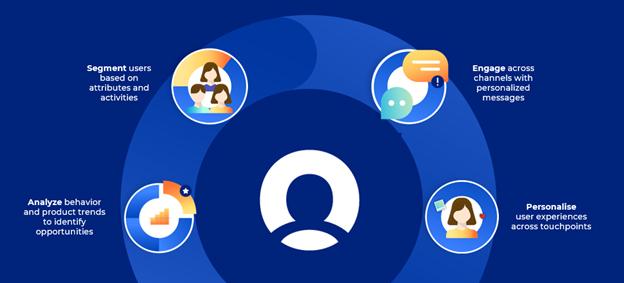
The Marketing automation tool helps you delight customers and retain them for longer. With the tool, you can analyze customer behavior and delight them with personalized communication at every touchpoint across their lifecycle.
Marketing Automation Services - Enterprise Campaign Orchestration Built for Revenue Impact
Most enterprises do not have a marketing execution problem. They suffer from a coordination problem. Campaigns are conducted on platforms that are disconnected. Customer Data Stripped in Silos Marketing, Sales, and Service teams do not have access to data simultaneously. Budgets are filled into channels without closed-loop attribution. The result: increased acquisition costs, inconsistent customer experiences and leadership teams not being able to track marketing spend to commercial outcomes.
Marketing automation services address this by replacing disparate campaign execution and replacing it with orchestrated and data-driven lifecycle engagement. When implemented correctly – integrated with CRM, loyalty platforms and customer data infrastructure – automation becomes the operational backbone of personalised, measurable marketing at scale.
This page describes the strategic capability, operational scope and decision framework that enterprises require when they consider a marketing automation agency for complex, multi-channel environments.
What Marketing Automation Delivers at the Enterprise Level
Marketing automation is very often misinterpreted as email scheduling software. At the enterprise level, it works as an integrated engagement engine – bringing together customer information, behavioural cues, channel execution and performance analytics into a unified orchestration layer.
A correctly architected marketing automation platform enables the following capabilities across the customer lifecycle:
Onboarding acceleration: Triggered welcome sequences, progressive profiling, and product education flows that reduce time-to-value for new customers.
Retention and re-engagement: Behavioural trigger campaigns – abandoned cart recovery, lapsed-customer reactivation and loyalty milestone communications – to reduce churn with no manual intervention.
Revenue expansion: Cross-sell and upsell recommendations powered by purchase history segmentation and predictive scoring models.
Lifecycle attribution: End-to-end visibility from first touch to repeat purchase, enabling marketing leaders to report on pipeline contribution rather than vanity metrics.
For organisations with a presence throughout retail, hospitality, real estate or financial services in the UAE and GCC, these capabilities are a direct solution to overcoming the marketing versus revenue accountability dilemma.
Core Capabilities of a Proven Marketing Automation Agency
Not all providers that offer marketing automation services provide the depth needed for enterprise environments. The difference lies in whether the agency operates at a platform-configuration level or at a strategic-orchestration level. Below you will find the 5 capability pillars that distinguish competent providers from those prepared to make complex, multi-market deployments.
1. Customer Journey Orchestration
Journey orchestration goes beyond linear campaign sequences. It maps the full customer lifecycle – awareness, acquisition, activation, retention and advocacy – and communicates at each stage using contextual communications based on real-time behavioural information. A capable marketing automation company builds these journeys to adapt dynamically: if a customer engages with a loyalty reward notification but ignores an upsell email, the system recalibrates the next communication automatically.
2. Behavioural Segmentation and Dynamic Targeting
Static demographic lists lead to diminishing returns. Enterprise grade automation segments audiences based on behavioural signals: browsing patterns, purchase recency, engagement frequency, loyalty tier status, channel preference. Dynamic segments update in real time, ensuring that campaign targeting is based on real-time customer intent instead of old assumptions.
3. Omnichannel Campaign Execution
Consumers in the UAE and wider GCC interact via email, SMS, WhatsApp, push notifications, in-app messaging and social platforms – sometimes within a single purchase journey. Effective marketing automation services help coordinate messaging across these channels with consistent branding, sequenced timing and frequency capping to avoid fatigue. The operational complexity of omnichannel execution is exactly where many internal marketing teams hit capacity limits, where outside expertise is vital.
4. CRM and Loyalty Program Integration
Automation without integration with CRM is a campaign tool. CRM integrated Automation is a revenue engine When marketing automation is hooked directly into customer relationship management platforms – such as Microsoft Dynamics 365 – and loyalty management systems, it has access to transactional histories, service interactions, loyalty point balances and lifetime value scores. This integration allows for hyper-personalised communications based on real customer activity, rather than generic messaging templates.
5. Attribution, Analytics, and Revenue Reporting
The final pillar discusses the question ever asked by every CFO: what is this delivering? Enterprise marketing automation should offer multi-touch attribution models, campaign level ROI analysis, and customer life time value tracking. Without this reporting layer, automation is an operational convenience and not a strategic asset.
Why Marketing Automation Services in UAE Demand Regional Expertise
The UAE represents one of the most commercially dynamic and digitally advanced markets globally. However, enterprises that deploy marketing automation without adapting to regional realities consistently underperform. Three factors make local expertise non-negotiable.
Bilingual and Multicultural Audience Complexity
The UAE consumer base is extremely diverse. Marketing automation services in UAE need to support Arabic and English communications – not as simple translations, but as culturally adapted messaging streams. Campaigns that work well in English may demand completely different creative strategies, visual hierarchies and calls-to-action in Arabic. Platforms must have support for right-to-left rendering, bilingual dynamic content blocks, and language preference-based segmentation.
Regulatory and Privacy Considerations
The UAE has adopted initiatives with increasing levels of data protection. Any marketing automation agency in UAE must ensure compliance of automation workflows with consent management requirements, data residency preferences and opt-out mechanisms to meet regulatory expectations in the region. Non-compliance exposes the company to legal action and undermines the consumer trust automation is meant to foster.
Consumer Behaviour Patterns in the GCC
Purchase cycles in the GCC are affected by the seasonal patterns – Ramadan, Eid, Dubai Shopping Festival, National Day – that demand pre-planned automation workflows that can scale rapidly. In addition, the GCC consumer also has a high mobile-first engagement, significant responsiveness to WhatsApp and SMS, and an expectation of personalised offers linked to participation in the loyalty programme. A marketing automation company in UAE must consider building these behavioural realities into the architecture from day one, and not retrofitting later on.
The Business Case: Quantifying the Impact of Lifecycle Automation
Leadership teams evaluating marketing automation investments need clarity on three commercial dimensions.
Reduction in Customer Acquisition Cost
Automated lead nurturing workflows convert prospects who would otherwise require repeated manual outreach or expensive paid retargeting. By delivering the right content at the right lifecycle stage, enterprises reduce the cost-per-acquisition while improving lead quality handed to sales teams.
Measurable Uplift in Customer Retention
Retention-focused automation – re-engagement triggers, loyalty reward notifications, post-purchase feedback loops – focuses directly on the revenue leakage that happens when customers silently disengage. Industry benchmarks have consistently shown that automated retention programmes are far superior to manual re-engagement efforts in terms of response rates and recovered revenue.
Operational Efficiency and Team Scalability
Marketing teams operating without automation spend a disproportionate share of their capacity on repetitive tasks: list management, campaign scheduling, report compilation, and manual analysis of A/B tests. Automation reclaims this capacity allowing teams to focus on strategy, creative development, and optimisation of performance – the things that compound over time.
Evaluating the Right Marketing Automation Agency in UAE: A Decision Framework
Selecting a marketing automation company in UAE is a strategic decision with multi-year implications. The following evaluation criteria distinguish providers capable of delivering sustained value from those offering surface-level implementation.
Platform proficiency and ecosystem breadth: Does the agency hold certified partnerships with leading marketing automation platforms such as MoEngage, Salesforce Marketing Cloud, Microsoft Dynamics 365 Marketing, or HubSpot? Can it recommend the right platform for your specific architecture, rather than defaulting to a single vendor?
CRM and data integration capability: Can the agency architect bi-directional integrations between marketing automation and your existing CRM, loyalty platform, e-commerce stack, and analytics infrastructure?
Regional delivery and bilingual execution: Does the agency maintain delivery teams within the UAE and GCC who understand local market dynamics, language requirements, and regulatory frameworks?
Loyalty and retention alignment: Marketing automation achieves its highest ROI when integrated with customer loyalty programmes. Evaluate whether the agency has demonstrated experience connecting automation workflows to reward structures, tier-based engagement, and lifecycle value maximisation.
Measurement and reporting rigour: Demand evidence of closed-loop reporting capability – from campaign execution to revenue attribution. Agencies that cannot demonstrate this discipline are operating at a tactical level insufficient for enterprise requirements.
How a Strategy-First Marketing Automation Company Operates
Implementation methodology tells us if a provider is a configuration shop or a strategic partner. Enterprises should anticipate a phased approach to engagement in four phases.
Phase 1 - Discovery and Marketing Operations Audit
Before any platform is configured, the engagement begins with a comprehensive audit of existing marketing operations: current tool stack, data flows, campaign workflows, team structure, and performance baselines. This phase identifies integration gaps, data quality issues, and process inefficiencies that must be resolved before automation can deliver results.
Phase 2 - Architecture Design and Journey Mapping
Based on the audit findings, the agency designs the automation architecture: customer journey maps, segmentation logic, trigger definitions, channel prioritisation, and integration specifications. This blueprint becomes the implementation roadmap, ensuring that technical build aligns precisely with business objectives.
Phase 3 - Implementation, Integration, and Testing
Platform deployment follows the architecture blueprint. This phase includes CRM integration, data migration, workflow configuration, template development, and comprehensive quality assurance testing across all channels and segments. Rigorous testing prevents the launch-day failures that erode stakeholder confidence.
Phase 4 - Optimisation, Reporting, and Continuous Improvement
Automation is not a set-and-forget deployment. Post-launch, the focus shifts to performance monitoring, A/B testing, segment refinement, and reporting cadence establishment. A committed marketing automation agency provides ongoing optimisation support, ensuring that automation programmes evolve alongside customer behaviour and business priorities.
Industry Applications: Marketing Automation Across the UAE and GCC
Marketing automation services provide measurable impact in a number of different sectors that have different lifecycle requirements.
Retail and E-Commerce
Automated abandoned cart recovery, post-purchase review requests, dynamic recommendations on products, seasonal campaign orchestration, and integration into loyalty programmes are used to drive repeat purchase rates and average order value.
Food and Beverage / Hospitality
Guest lifecycle management – from booking confirmation to post-visit feedback – combined with personalised dining and experience offers based on visit frequency, spend tier and preference data.
Real Estate
Lead nurturing sequences based on type of property of interest, budget range and enquiry stage. Automated handoff protocols between marketing-qualified and sales-qualified leads make sure that no prospect falls through the gap.
Financial Services and Insurance
Compliance aware automation workflows for policy renewal reminders, cross-sell recommendations, onboarding document collection and customer satisfaction measurement – all within regulatory communication boundaries.
Healthcare and Wellness
Appointment reminder automation, patient education drip campaigns, follow-up sequences for post treatment that increases retention and reduces no-shows and administrative burden.
Next Step: Assess Your Marketing Automation Readiness
Whether your organisation is deploying marketing automation for the first time or re-evaluating an underperforming implementation, the starting point is always the same: an honest assessment of your current marketing operations, data infrastructure, and customer lifecycle gaps. Yegertek partners with enterprises across the UAE, KSA, Qatar, Bahrain, and East Africa to design and implement marketing automation programmes that connect directly to CRM, loyalty, and revenue systems.
Request a consultation to evaluate your marketing automation maturity and identify the highest-impact opportunities for your organisation.
POWERING CROSS-FUNCTIONAL ENGAGEMENT FOR THE CUSTOMERS
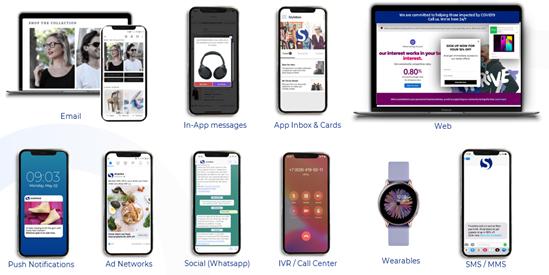
Learn more about Marketing Automation and the how-to drive Customer Lifetime Value, connect with us, and our experts will guide you in the process of Marketing Automation with MoEngage.
Frequently Asked Questions - Marketing Automation Services
Start by assessing platform know-how, CRM integration capabilities and regional market experience. A good marketing automation agency should show familiarity with working across multiple platforms – not just one vendor – and provide evidence of linking automation with other business systems (such as loyalty, e-commerce and analytics). Request case studies from your industry vertical, and check to see if the agency is using a strategy first approach rather than just jumping off to platform configure. The ability to support campaigns in two languages, as well as GCC regulatory compliance is essential for UAE-based operations.
Pricing depends on several variables: the complexity of your customer lifecycle journeys, the number of channels requiring orchestration, CRM and data integration depth, the volume of active contacts and communications, and whether the engagement includes strategy consulting or is purely implementation-focused. Platform licensing fees are typically separate from agency service costs. A reputable provider will scope the engagement based on a discovery audit rather than offering a fixed price before understanding your specific requirements.
A structured enterprise implementation can take between eight to sixteen weeks depending on integration complexity, data readiness and number of customer journeys being deployed in the initial phase. Organisations with clean, centralised customer data and defined customer data lifecycle stages can get faster deployment. A phased rollout – getting core workflows up and extending iteratively – is usually more effective than trying to do a more comprehensive launch, because performance-based improvement can be done before scaling up.
Expect a four phased approach: discovery and audit (assessing current systems, data flows, and gaps), architecture design (journey mapping, segmentation logic, integration blueprints), implementation and testing (platform build, CRM connection, quality assurance) and ongoing optimisation (performance monitoring, A/B testing, reporting). Agencies that bypass the discovery phase or go straight to the platform configuration without understanding your business context introduce huge risk of misalignment issues between automation capability and commercial objectives.
The main differentiator is the combination of marketing automation with the expertise of customer loyalty programmes and Microsoft Dynamics 365 CRM capabilities. Most marketing automation agencies operate in isolation from CRM and loyalty systems. This combined competency – spanning automation, loyalty architecture, clienteling and customer analytics – means campaigns are informed by transactional behaviour, loyalty tier data and lifetime value metrics. This integration generates much more personalised and commercially efficient automation results.
The engagement starts with an initial consultation to understand your business objectives, existing technology stack, customer data maturity and existing marketing operations. From there, a discovery audit identifies specific gaps and opportunities. This audit informs a scoped proposal with clear deliverables, timelines and investment requirements. There is no commitment beyond the initial consultation and the process is designed to provide leadership teams with the clarity necessary to make an informed commitment.
Yes, and this integration is where marketing automation delivers its highest return. When automation workflows access loyalty data – point balances, tier status, reward redemption history, and engagement frequency – campaigns become highly contextual. For example, a customer approaching a loyalty tier upgrade can receive an automated encouragement campaign, while a dormant high-value member receives a tailored reactivation offer. This level of personalisation is only possible when automation and loyalty systems share a unified data layer.
Enterprise marketing automation is inherently customisable. Journey logic, trigger conditions, segmentation rules, content blocks, channel sequencing, and send-time optimisation can all be tailored to your specific customer lifecycle. Additionally, dynamic content – where email or message content adapts based on recipient data attributes like language, location, purchase history, or loyalty status – ensures that every communication feels individually relevant. Custom integrations with APIs, data warehouses, or proprietary systems can be scoped during the architecture phase.
Post-launch support should include performance monitoring, regular reporting reviews, A/B testing of key workflows, segment and journey optimisation and platform health checks. As customer behaviour changes and business priorities shift, automation programmes need continuous modification. Look for providers who offer structured optimisation retainers as opposed to project-based engagements that end at launch. Ongoing support also includes technical assistance for new integrations, campaign expansion and platform updates.
Retail, e-commerce, food and beverage, hospitality, real estate, financial services, healthcare, and education are among the sectors achieving the strongest results from marketing automation in the UAE. The common factor is a definable customer lifecycle with multiple engagement touchpoints and measurable conversion events. Any enterprise managing a substantial customer base – particularly those with loyalty programmes, multi-channel operations, or complex sales cycles – stands to gain operational efficiency, improved retention, and clearer marketing-to-revenue attribution through structured automation.
Powered By :